Signed in as:
filler@godaddy.com


The Great Material Disconnect
Global trade relies on Ultra-Large Container Vessels to move goods, yet these high-velocity pipelines stall at outdated seaports. While logistics technology has evolved, marine terminals remain frozen in the 1960s, stacking containers up to six high in open-air yards. This Last-In-First-Out (LIFO) model forces slow gantry cranes into wasteful "digging" shuffles to retrieve buried freight. This friction causes massive truck idling, exposes cargo to harsh weather, increases energy use, and strains power grids.
Adapting Retail Logistics to Heavy Freight
The solution requires adapting Fortune 50 retail systems—like those of Amazon and Walmart—to maritime trade. Retail networks eliminated LIFO bottlenecks by using automated high-bay racks where every item is individually accessible. By treating containers as heavy industrial pallets and storing them in an indoor Rack-Supported Building Automated Storage and Retrieval System (AS/RS), terminals give every container direct random-access addressability. Structural frame pins bear the load, completely eliminating rehandling shuffles.
A Vision for 2050
Transitioning to the Seaport Execution System yields a +66.2% increase in container velocity, 100% elimination of rehandling shuffles, a 75.0% smaller land footprint, a 57.2% cut in energy use, and a 75.3% reduction in carbon emissions—delivering an empirically verified blueprint for continuous, zero-emission flow.
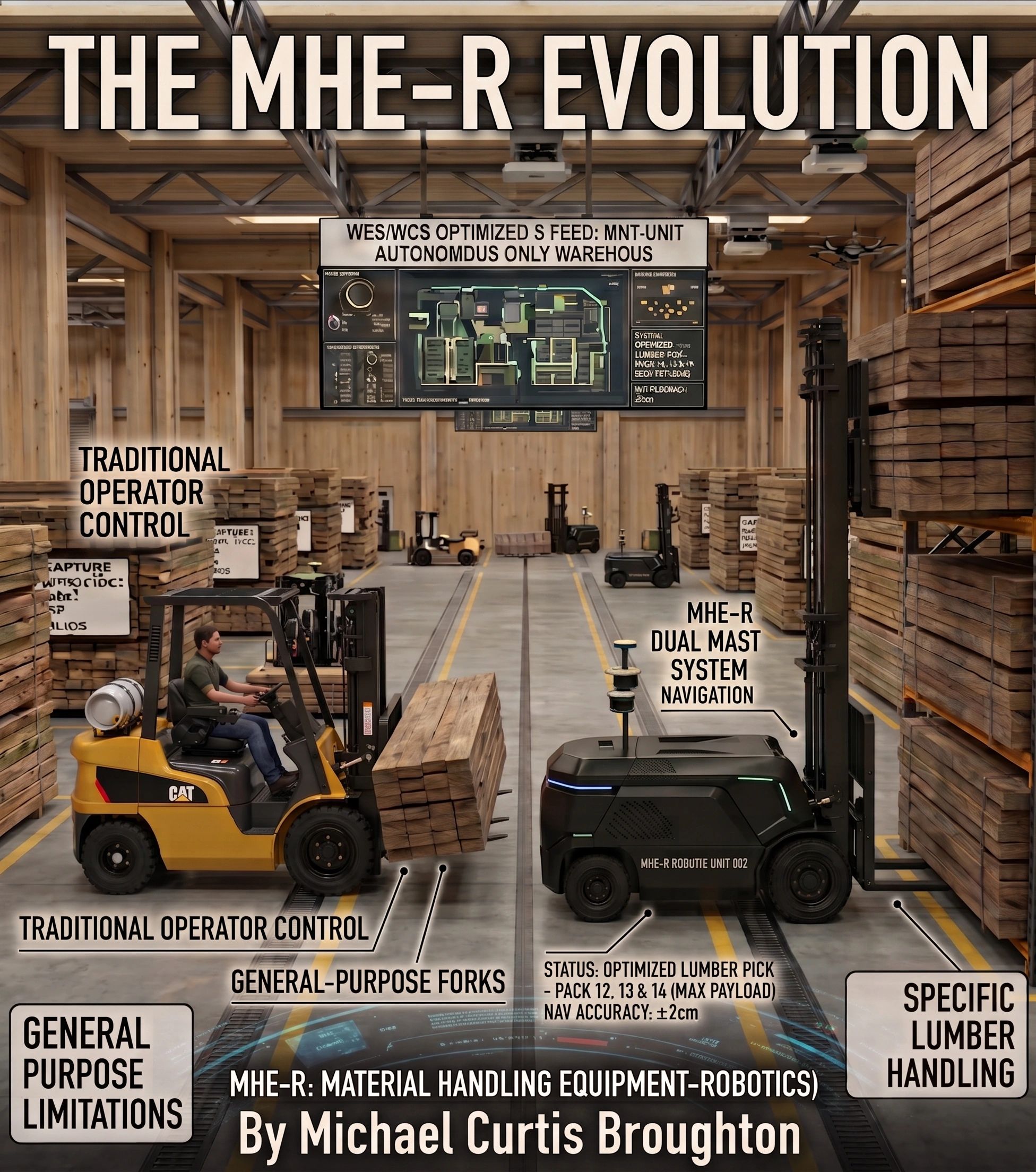
Coined by Michael Curtis Broughton, the MHE-R (Material Handling Equipment-Robotics) Revolution replaces traditional human-operated machinery with driverless robotic units to move heavy, non-palletized goods like lumber and appliances. Paired with Warehouse Execution Systems (WES) and Warehouse Control Systems (WCS), this automation streamlines inventory placement, eliminates distribution bottlenecks, and boosts capital efficiency across large retail logistics networks.
Broughton’s 2024 Master’s thesis at Northern Illinois University (NIU), "Large Retail Logistics Warehouse Execution System," provides the empirical framework for this technology. Supervised by Dr. Reinaldo Moraga, his research shows that replacing standard warehouse management practices with an integrated WES/WCS model yields direct financial gains—including up to a 90% reduction in labor-related operating costs—while advancing supply chain flexibility and eco-friendly warehousing.
Modernizing traditional retail distribution center business processes through autonomous robotics.
Seamlessly orchestrating Stock, Store, and Ship functions under a unified software hub.
Transforming raw facility productivity into measurable corporate financial performance.
In The News!
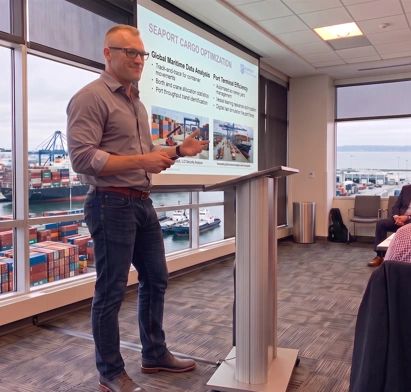
Logistics Expert and Scholar Michael Curtis Broughton Publishes New Book THE SEAPORT EXECUTION SYST
In The News!
HOUSTON, Aug. 19, 2026 (GLOBE NEWSWIRE) -- Retired U.S. Army Captain, industrial engineer, and logistics innovator Michael Curtis Broughton has published The VERONIC Industrial Standard: An Essential Guide for Fleet and Network Optimization.